
Announcing: The IIFAC Public Participation Process
Address the complex issues that keep you awake at night with an Effective Public Participation Plan
You need to engage with the diverse groups that are affected by decisions your organization makes

You want:
• Reliable qualitative and quantitative data
• Constructive, collaborative relations with key stakeholders
• A clear plan to integrate the voice of diverse publics into the decision-making process

You also know that none of this is easy to achieve.
Obstacles include:
- Your team’s inexperience in public engagement
- Public mistrust of your organization
- Lack of understanding (on all sides) about the core issues

If you are ready to address these challenges in a principled, ethical, orderly way, The IIFAC team can help. Our signature 3 step approach
- Meets international standards
- Is customized for the specific context of each client
- Can be delivered in Spanish or English
| In every step we collaborate with your team to produce optimal results |
|---|
1. Gather Information |
| Collect and analyze base line information and create a comprehensive stakeholder map |
2. Design the Plans |
| Public Participation. Clarify the purpose and desired outcomes of the public engagement process; identify the anticipated role of the public(s) in each step; select appropriate participatory activities and techniques; define the resources needed to implement the plan, including options for virtual activities. |
| Monitoring and Evaluation. Decide what aspects of the plan are to be monitored and evaluated, when the data is needed and who will document, collect and analyze the data. |
| Communications. Define the communication goals, messages and channels. |
| Capability development. Assess the internal team needs for training in Public Participation skills. |
3. Implement |
| Coordinate, facilitate and document the implementation of the above plans. Periodic meetings with the client to track results and adjust plans as needed. |
How our process works
Let’s face it. You are here because what you have tried is not working – or you are at a loss about how to begin to create an effective public participation process. We can help.
We work with your team to strategize and design solutions that mitigate the risk of public protest, backlash and decision gridlock. The result is meaningful participation, better decisions and a culture of collaboration.
The training we received from Beatrice Briggs marked a watershed for our team. It broadened our perspective about the concepts underlying public participation and gave us the tools to design efficient and effective engagement processes. Years later, many of us are still applying these concepts, creating spaces where civil society can speak out and exercise the right to influence public policies oriented toward Sustainable Development.
Mateo Castillo Ceja
- Professor, Universidad Michoacana de San Nicolás de Hidalgo, Morelia, Michoacán, México,
- Mexican Representative for the International Initiative to support the Earth Charter
- Coordinator of the Mexican Earth Charter network
- Leader of the team responsible for Social Participation and Transparency, Ministry of the Environment and Natural Resources, 2006-2012.
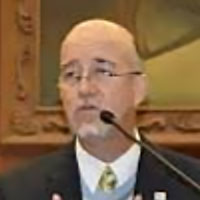 Mateo Castillo Ceja
Beatrice Briggs is an invaluable member of team working to generate a large-scale social movement to conserve the source of water for the 25 million inhabitants of central Mexico. Her skills in designing and facilitating participatory processes involving a wide range of actors and sectors are an essential part of our strategy to achieve a sustainable future for the complex ecosystem known as the Water Forest.
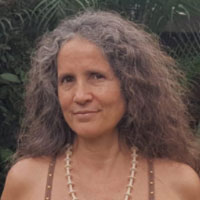 Beatriz Padilla, Founder and President. Fundación Biósfera de Anáhuac, AC
Learn more about the International Association for Public Participation
The Cost of Not Taking Action
Cost overruns
Delayed or canceled projects
Failure to reach a broad and diverse demographic
Lost opportunities to stimulate constructive dialogue among stakeholders
In today´s world, people want their voice to be heard. They want to play a role in shaping their future.
If you keep clinging to the ineffective, non-inclusive processes of the past, your public outreach efforts will continue to disappoint.
The IIFAC process combines proven participatory tools and techniques with experienced, professional facilitation to produce the results you desire.
Imagine
Public engagement that generates
- Deeper insight into public opinion about potentially controversial issues
- Quantifiable data that contributes to smart planning
- Qualitative data to better understand public concerns
- Proof that your organization lives its values and respects the values of others
Sustainable decisions that are
- Economically viable
- Ecologically defensible
- Technically feasible
- Socially /culturally acceptable
This is possible for YOU.
Each day that you do not take action is a missed opportunity
Your team and the communities you serve need your leadership
Start today
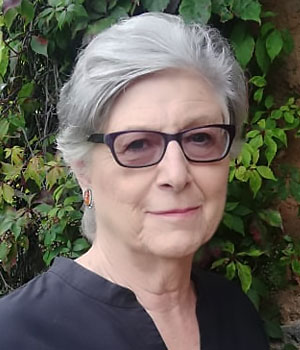
Beatrice is the founder and director of the International Institute for Facilitation and Change (IIFAC), headquartered in Cuernavaca, Mexico. She began to facilitate and train groups in the early ’90s in Chicago and has been a permanent resident in Mexico since1998.
She was president of the International Association for Public Participation in 2006 and currently serves on a committee that is introducing that organization´s values and methods in Latin America. She is also a licensed trainer for the Association.
Beatrice served as the representative of Latin America and the Caribbean on the Board of Directors of the International Association of Facilitators. (IAF). She is an IAF Certified™ Professional Trainer.
She has facilitated group processes in over 30 countries around the world, primarily in Latin America and the Caribbean. Her experience in public participation includes:
2019 – present P2 Consultant and facilitator for the organizing team of the Water Forest Initiative, Mexico
2011-2012 Lead facilitator of the participatory process to create the Conservation Strategy for the Water Forest
2008 Center for Civic Collaboration (Centro de Colaboración Cívica, A.C.). Evaluation of the dialogue process about public safety and human rights, México, DF
2009 Planning Committee for State Development, Baja California Sur; (Comité de Planeación para el Desarrollo del Estado (COPLADE) Five-day training in Public Participation for state government officials.
2008 Workshop on “effective meetings” for the Citizens Council of the Human Rights Commission, Jalisco, Mexico
2008 Federal Ministry of Environment and Natural Resources (SEMARNAT)
Coordination Unit for Social Participation and Transparency (Unidad Coordinadora de Participación Social y Transparencia). Mexico City.
- Certification in public participation for 17 team members
- Workshop in facilitation of multisectoral meetings
2006 Federal Electricity Commission (Comisión Federal de Electricidad) Training in public participation for the team responsible for pre-project planning for hydro-electric projects, Cuernavaca, Mexico
Academic Background
McGill University, Montreal, Canada B.A. 1966, (honours English)
Mundelein College, Chicago, USA M.A. 1982, Religious Studies
University of Chicago, USA M.A. 1985, History of Religions